
Description
Product Overview
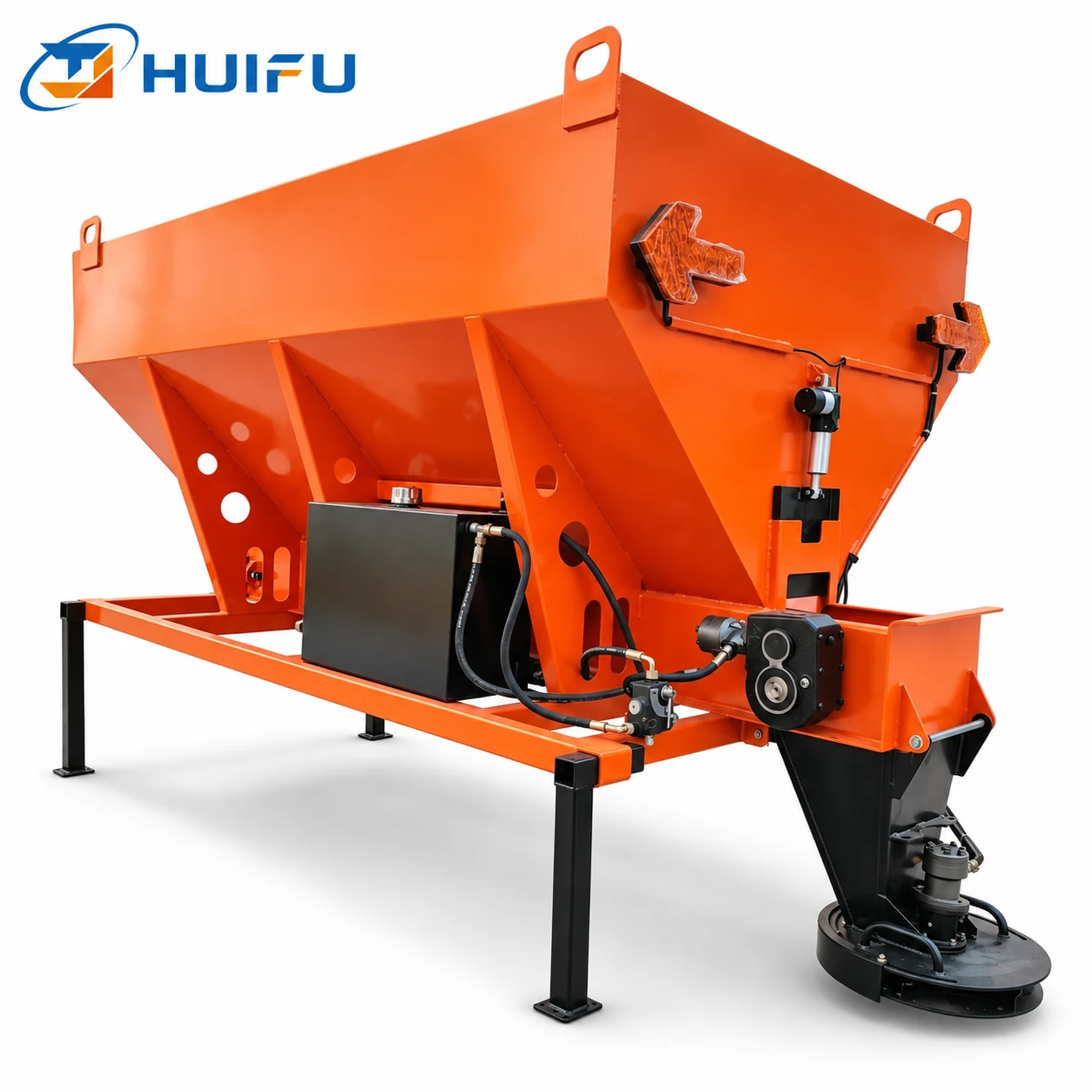
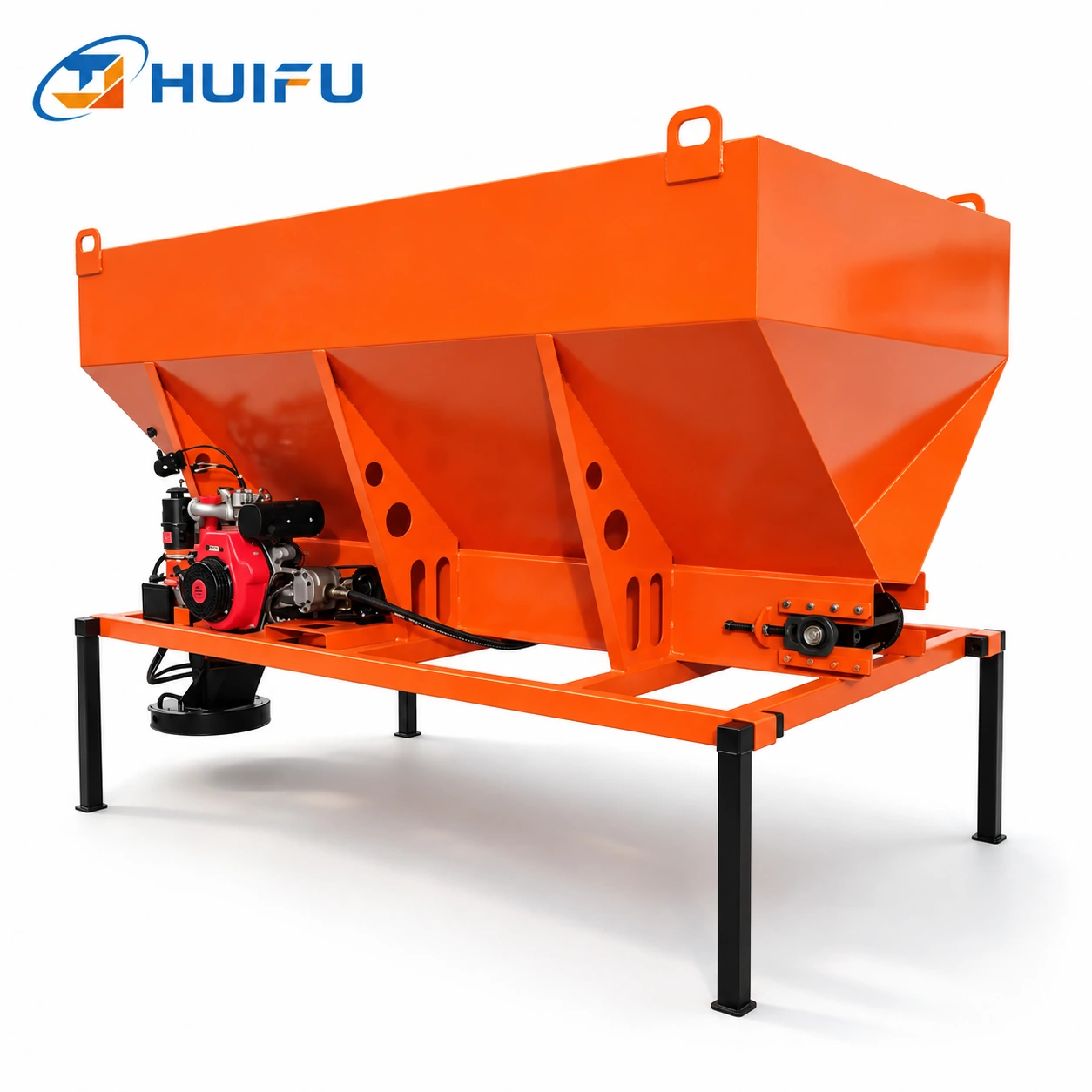
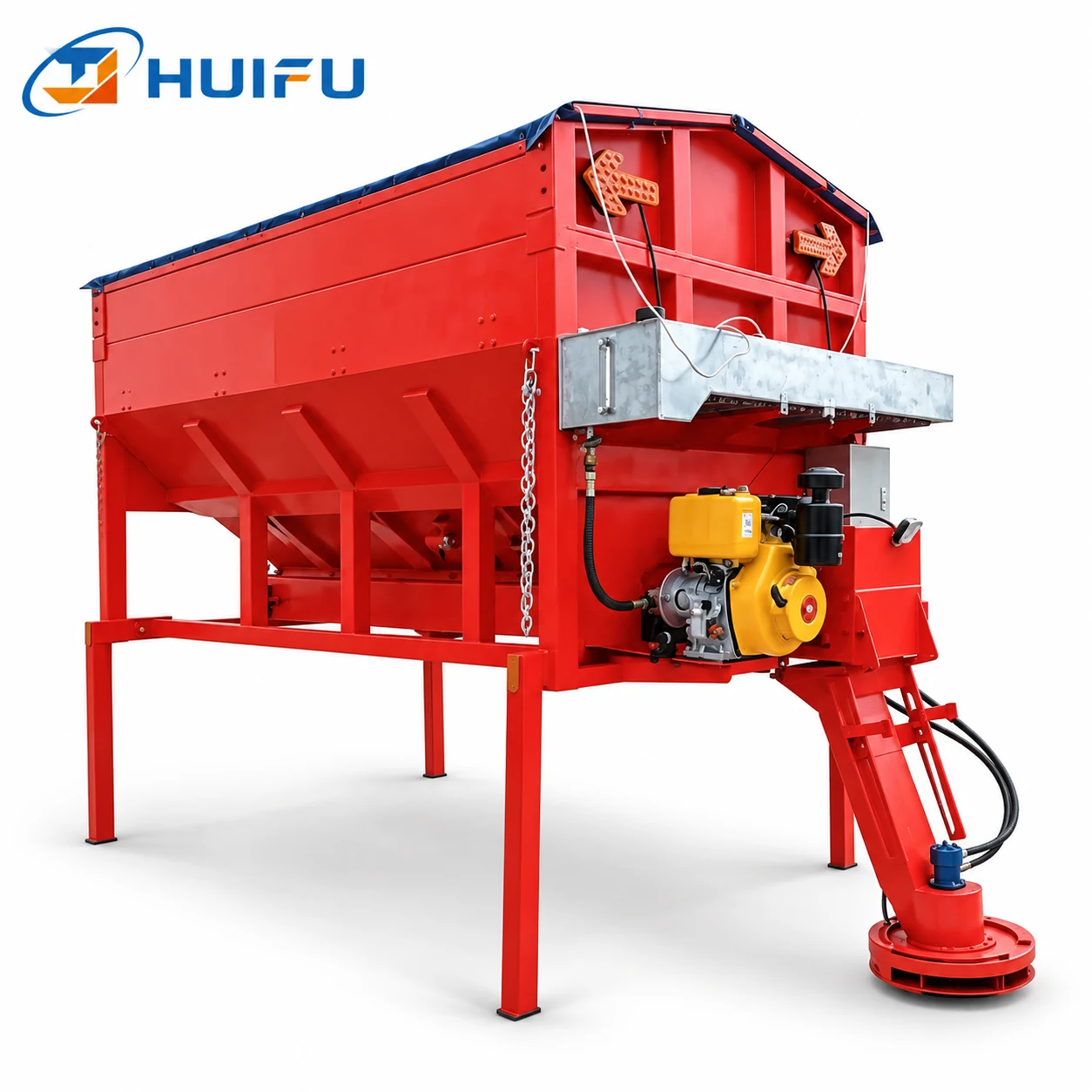
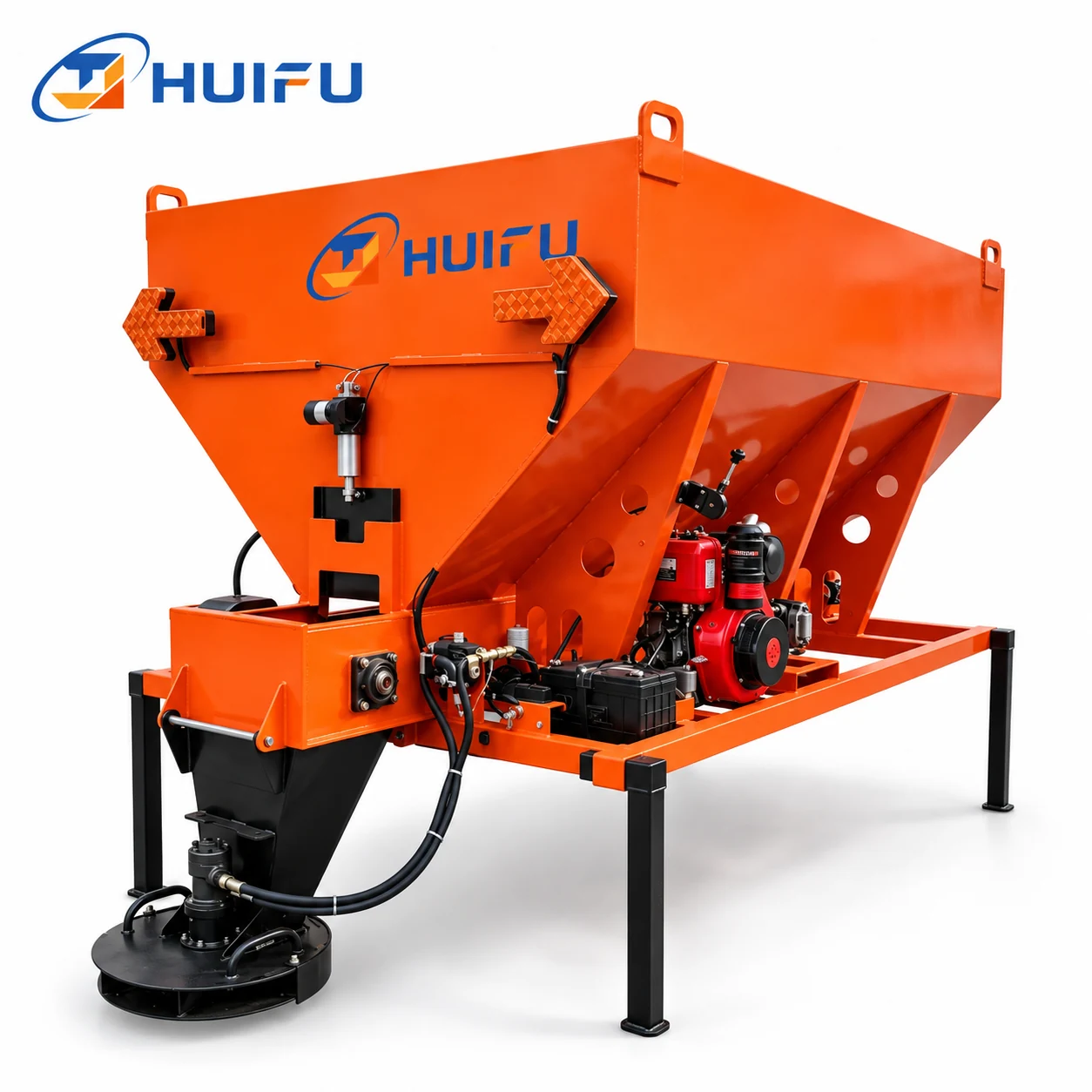
The 1.5 Cubic Meter Vehicle-Mounted Snow Melting Agent Spreader is designed for mechanical spreading of snow-melting and deicing materials on roads during winter maintenance operations.
The machine combines a 1.5m³ hopper, chain-slat material conveying system and disc-type spreading device. A 12 HP diesel engine provides the specified auxiliary power, while manual throttle control allows the operator to control engine output during spreading.
With a specified spreading width of 2-8m, the unit is suitable for road snow and ice control operations where controlled material delivery and vehicle-mounted spreading are required.
Key Features and Advantages
1.5m³ Material Hopper
The 1.5m³ hopper provides storage capacity for snow-melting material during road maintenance operations.
Chain-Slat Conveying System
The chain-slat conveyor transfers material from the hopper to the spreading device, supporting continuous material feeding during operation.
Disc-Type Spreading Device
The disc spreading mechanism distributes snow-melting material across the road surface with a specified spreading width of 2-8m.
Vehicle-Mounted Configuration
The spreader is designed for vehicle-mounted installation, making it suitable for mobile road deicing and winter maintenance work.
Independent Diesel Power
The unit is equipped with a specified 12 HP diesel engine and manual throttle control for operating the spreading system.
Winter Road Maintenance Application
The machine is intended for snow-melting material spreading on roads, helping mechanize winter deicing operations and reduce manual spreading work.
Technical Specifications
| Product Type | Vehicle-Mounted Snow Melting Agent Spreader |
|---|---|
| Power | 12 HP Diesel Engine (Youpu) |
| Overall Dimensions | 2720*1416*1195mm |
| Hopper Dimensions | 2000*1416*1195mm |
| Hopper Volume | 1.5m³ |
| Maximum Load Capacity | 8000kg |
| Spreading Device Type | Disc Type |
| Material Conveying System | Chain-Slat Conveyor |
| Spreading Width | 2-8m |
| Mounting Type | Vehicle-Mounted |
| Throttle Control | Manual Throttle |
| Battery | 12V 80AH*1 |
| Motor | BM2-80 |
Applications
Suitable for:
- Urban and municipal roads
- Industrial and commercial access roads
- Parking areas and service roads
- Winter road maintenance operations
Applicable materials:
- Snow-melting and deicing materials suitable for the conveying and spreading system
Operation Instructions and Safety Notes
Pre-operation vehicle inspection
Check the carrier vehicle condition, including tires, brakes and lighting. Confirm that the power system, hopper, chain-slat conveyor and disc spreading device are in normal working condition before operation.
Snow-melting material preparation
Use suitable deicing material according to road, temperature and weather conditions. Avoid wet, heavily caked material or large foreign objects that may interfere with conveying or spreading.
Work-area assessment
Before spreading, evaluate road width, traffic conditions, slopes, curves and weather conditions so the spreading width and operating method can be selected appropriately.
Operating safety
Follow local traffic and work-site safety requirements. On icy roads, avoid sudden braking and sharp turns. Adjust vehicle speed and spreading operation according to road and weather conditions.
Spreading-area safety
Keep personnel clear of the discharge area while the disc spreading mechanism is operating. Stop the system before removing any blockage or inspecting moving components.
Maintenance Recommendations
- Clean the hopper, chain-slat conveyor, spreading disc, vehicle body and chassis after each operation to remove residual snow-melting material.
- Rinse corrosive residue with clean water where appropriate, then dry the equipment to reduce corrosion and rust.
- Inspect the conveyor and spreading mechanism for blockage, wear or restricted movement before the next use.
- Check the diesel engine, battery and related operating components regularly according to their normal service requirements.
- Store unused snow-melting material in a dry and ventilated location to reduce moisture absorption and caking.
- Store the spreader in a dry, ventilated area when not in service.