
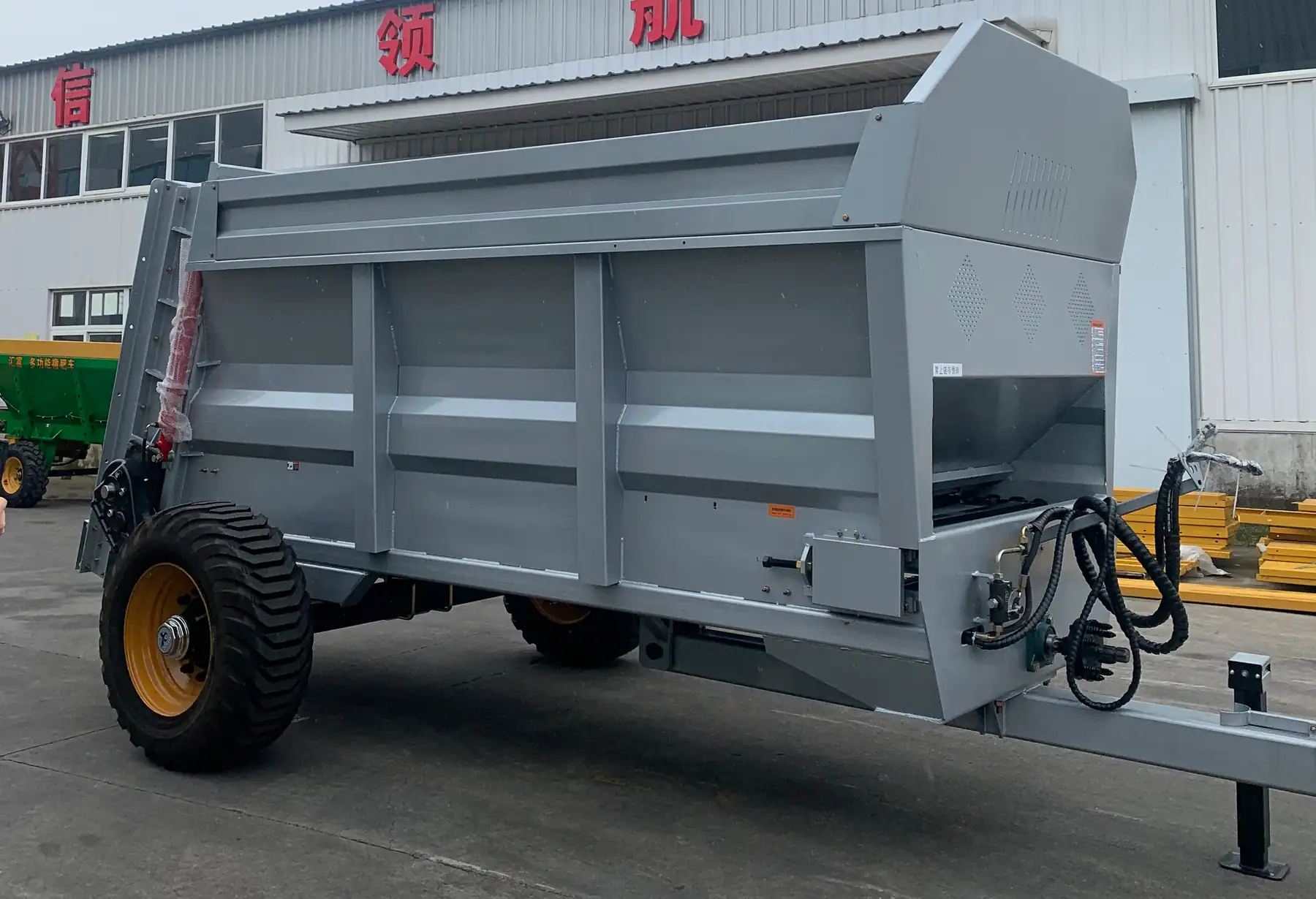
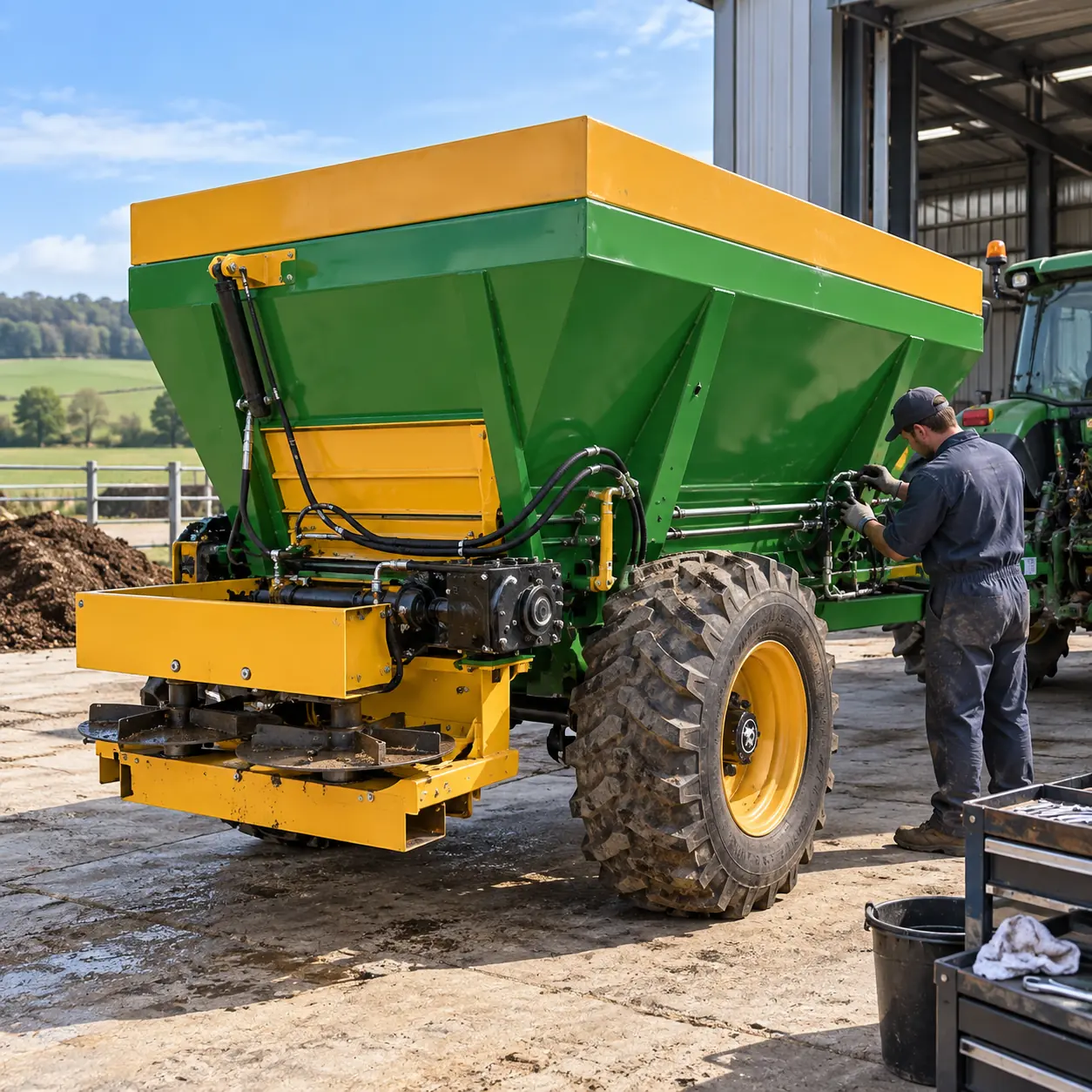

Manure and fertilizer residues hold moisture against steel surfaces and can accelerate corrosion. They can also build up around the chain-board feed and rear spreading assembly, changing material flow and increasing wear. A reliable maintenance routine therefore begins with cleaning after use and continues with regular inspection of the connection, tires, feed system, discs and transmission components.
The checklist below applies to HUIFU 3m³ and 5m³ hydraulic trailed dual-disc manure spreaders. Always follow the tractor and spreader manuals for model-specific service procedures, lubrication points and safe isolation steps.
Before every operating day
- Park on stable ground and make sure the tractor and spreader cannot move before beginning the inspection.
- Check the connection between the spreader and towing equipment. Inspect pins, hooks and related parts for looseness, damage or missing retainers.
- Inspect both tires for visible damage and correct pressure. Check the wheel hubs for looseness or abnormal condition.
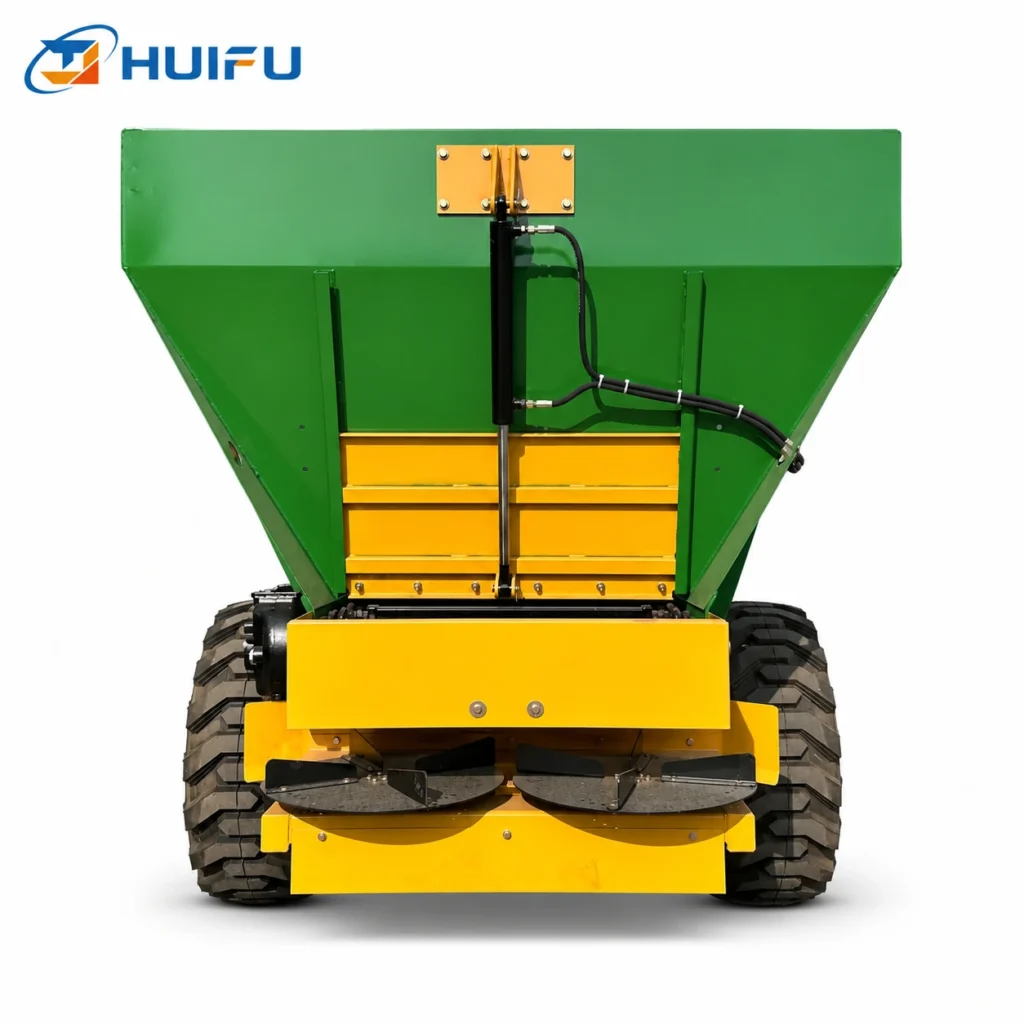
- Examine the spreading discs and blades for wear, damage, hardened residue and foreign material that could obstruct rotation.
- Inspect accessible transmission and rotating components for abnormal wear, blockage or loose parts.
- Look through the hopper and chain-board path for leftover material, stones, wire or other objects that may interfere with feeding.
- Check hydraulic connections and hoses according to the equipment manual. Do not operate with visible damage or leakage.
- Confirm that the planned load will remain within the machine’s rated capacity and is suitable for the tractor and field conditions.
During operation
Maintenance includes observation while the machine is working. A change in sound, vibration, feed consistency or spreading pattern can be the first sign of a loose, worn or obstructed component.
- Watch whether material advances consistently toward the rear of the hopper.
- Observe the left and right sides of the spreading pattern for a sudden imbalance.
- Reduce speed and stop safely if the chain-board feed, discs or other rotating parts appear blocked.
- Do not approach, reach into or attempt to clear the spreading assembly while components are moving.
- Recheck the machine after operating over rough ground or after a noticeable impact.
After each shift
Post-operation cleaning is the most important recurring task because it removes corrosive residue before the machine is stored.
- Empty remaining fertilizer from the hopper and rear spreading area.
- Remove packed material from the chain-board path, outlets, discs and blades after the machine is safely isolated.
- Clean the hopper and spreading device. Water may be used, but avoid directing it into electrical and transmission components.
- Allow the machine to dry rather than placing it into enclosed storage while surfaces are still wet.
- Inspect cleaned surfaces for paint damage, corrosion, cracks or wear that may have been hidden by residue.
- Note any repair required before the next operating day.
Periodic inspection points
| Area | What to inspect | Action when a problem is found |
|---|---|---|
| Hitch and connection | Pins, hooks, retainers, looseness and visible wear | Replace damaged parts and secure the connection before movement |
| Tires and hubs | Pressure, cuts, abnormal wear, hub condition | Correct the fault before loading or transport |
| Chain-board feed | Buildup, blockage, uneven movement and component wear | Clean and service according to the machine manual |
| Discs and blades | Wear, damage, buildup and left-right condition | Clean or replace severely worn components |
| Transmission and rotating parts | Abnormal wear, looseness, noise or obstruction | Stop operation and correct the cause before reuse |
| Hopper and frame | Residue, corrosion, cracks and damaged coating | Clean, dry and repair affected areas promptly |
| Hydraulic components | Hose damage, connection condition and visible leakage | Depressurize safely and use qualified service as required |
Inspection frequency should reflect workload, material condition and the manufacturer’s service instructions. Wet, corrosive or fibrous material may require more frequent cleaning and observation than a free-flowing dry fertilizer.
Preparing for long-term storage
- Remove all fertilizer residue from the hopper, chain-board path and spreading assembly.
- Wash only where appropriate and let the machine dry completely.
- Inspect discs, blades, transmission components, tires, hubs and the towing connection; complete needed repairs before storage.
- Protect exposed or damaged surfaces according to the maintenance manual.
- Store the spreader in a dry, well-ventilated location to reduce moisture and rust exposure.
- Keep the machine unloaded and positioned securely for the storage period.
Common maintenance mistakes
Leaving residue in the hopper overnight
Residual manure or fertilizer can harden, retain moisture and hide damage. Clean the machine while the material is still easier to remove.
Cleaning without drying
Washing removes fertilizer but can leave moisture in seams and around components. Provide enough ventilation and drying time before storage.
Replacing one worn part without inspecting its pair
A difference between the left and right disc assemblies can contribute to an uneven pattern. When one blade or disc component shows significant wear, inspect the corresponding parts on the other side.
Returning to work without a test pass
After maintenance or component replacement, make a short test pass and observe feeding and distribution before beginning the full job.
Keep a simple service record
Record the date, material handled, cleaning performed, parts inspected and repairs completed. Add notes about unusual vibration, blockage or pattern changes. A short log helps identify recurring problems and ensures that outstanding work is completed before the next busy period.
The same core checklist applies to the 3m³ hydraulic trailed dual-disc manure spreader and the 5m³ hydraulic trailed dual-disc manure spreader. Refer to the supplied manual for model-specific service intervals and contact the manufacturer or a qualified technician when a repair is beyond routine operator maintenance.